
Why Psychological Safety is the New Competitive Advantage for Teams
Psychological safety is more than a corporate buzzword – it’s the X-factor behind today’s most innovative and effective teams. When employees know they won’t be punished or ridiculed for speaking up with ideas or concerns, it unlocks a culture of candor and collaboration. Research by Amy Edmondson and others shows that teams with high psychological safety don’t just feel better – they learn faster, innovate more, perform higher, and report greater job satisfaction. This post explores why creating a psychologically safe workplace is essential for organizations that want to unlock their people’s full potential.
Brian McNamara
12/31/20253 min read
Why Psychological Safety Is the Secret Sauce of High-Performing Teams
Why do some teams consistently innovate while others struggle to keep up? Research increasingly points to an often invisible factor: psychological safety. This term describes a workplace climate where people feel safe to take risks, voice ideas, and admit mistakes without fear of humiliation or punishment. In a psychologically safe team, no one is belittled for asking a “silly” question or proposing a new approach. Instead, candor and curiosity are encouraged, creating the ideal conditions for learning and innovation.
Harvard Professor Amy Edmondson, who first introduced the concept, defines psychological safety as “a belief that one will not be punished or humiliated for speaking up with ideas, questions, concerns or mistakes.” In practical terms, it means interpersonal fear is unwelcome – team members trust that they can share input or admit an error without being embarrassed or rejected. This confidence stems from mutual respect and trust, and it lays the foundation for the extraordinary benefits we see in high-performing organizations today.
What Is Psychological Safety?
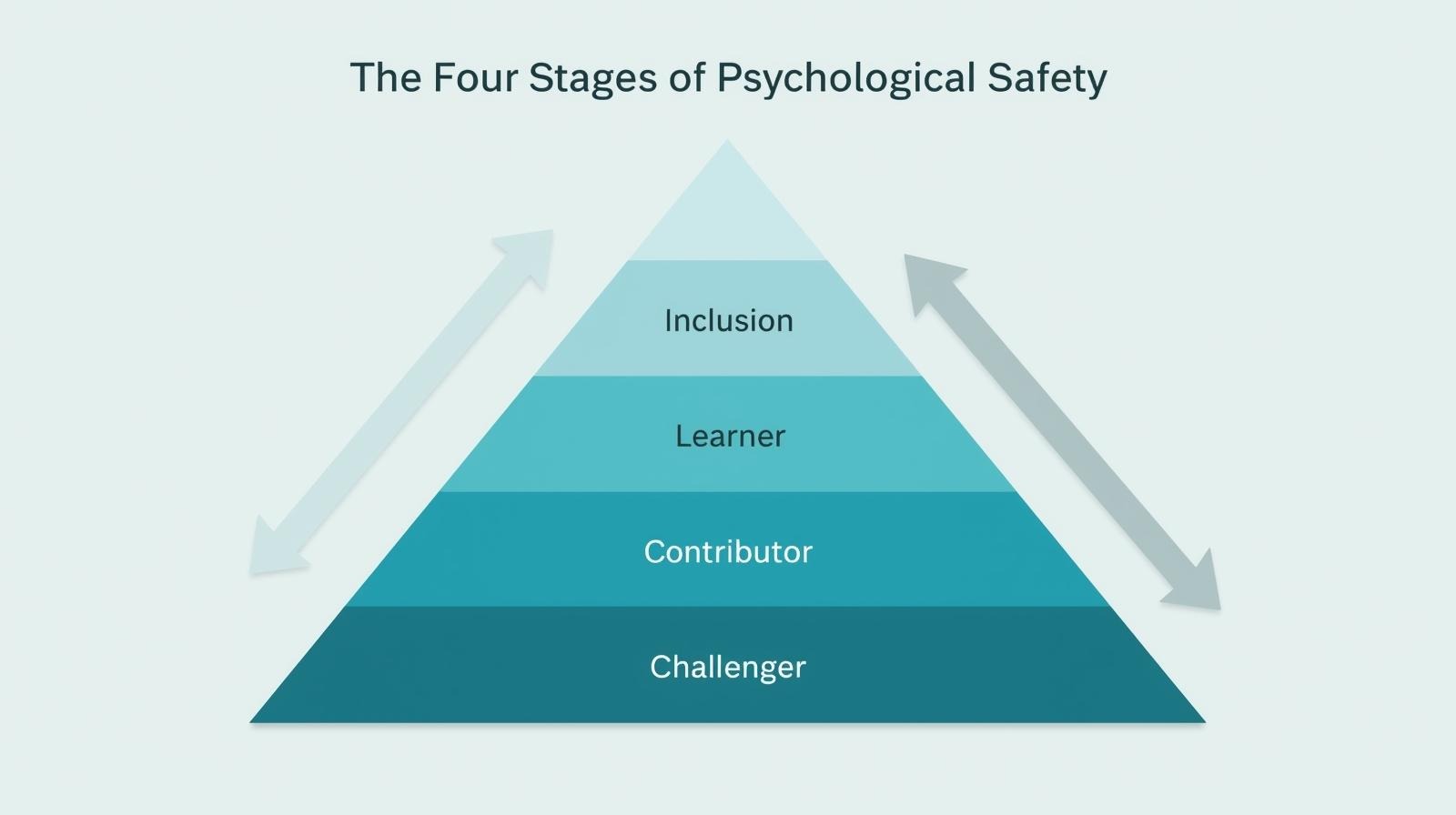
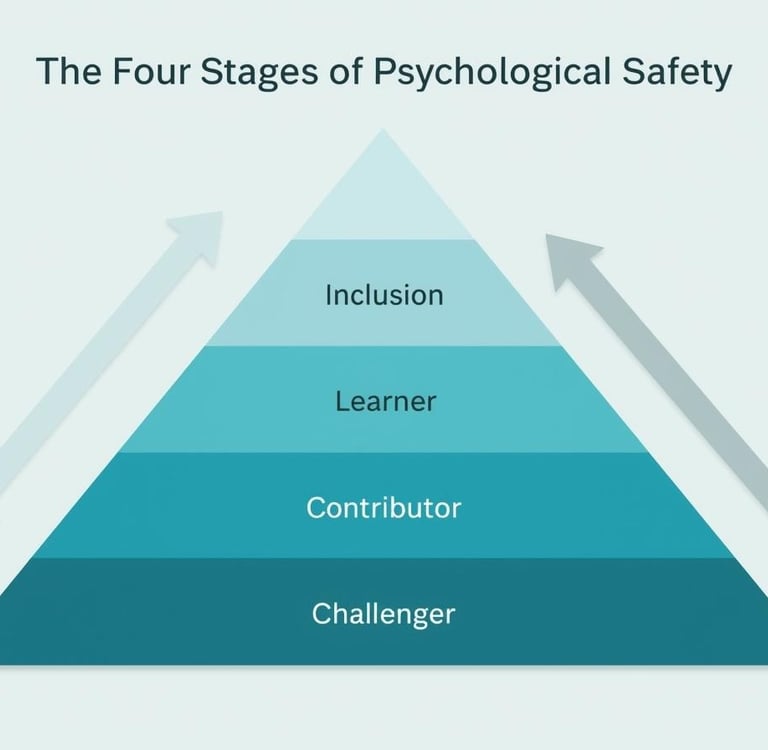
At its core, psychological safety is about creating a climate of trust and respect. In such an environment, people feel included and valued as team members, rather than worrying about protecting themselves. Leadership expert Timothy R. Clark expands on Edmondson’s idea by outlining four progressive stages of psychological safety: feeling included, feeling safe to learn, safe to contribute, and safe to challenge the status quo.
In Clark’s framework, teams evolve through these stages on the path to full psychological safety:
Inclusion Safety: Everyone feels accepted and included for who they are.
Learner Safety: Team members feel safe to ask questions, experiment, and even fail publicly.
Contributor Safety: Individuals feel confident to offer their ideas and skills.
Challenger Safety: People can challenge norms and speak up about concerns without fear.
Progressing through these stages creates what Clark calls “a culture of rewarded vulnerability,” where speaking up and taking thoughtful risks are positively reinforced. When a team reaches challenger safety, innovation can truly flourish – anyone can raise game-changing ideas or flag concerns that avert disaster, all without fear of backlash.
How Psychological Safety Drives Innovation and Learning
Psychological safety isn’t just a feel-good idea; it’s strongly linked to tangible improvements in innovation and learning. When employees feel safe, they are far more likely to share creative ideas, ask for feedback, and learn from mistakes.
A 2022 meta-analysis of 94 studies provides hard evidence: psychological safety has a significant positive effect on both individual innovative behavior and team innovation performance. In other words, teams with higher psychological safety consistently generate more new ideas and creative solutions than those in fear-based cultures.
Why? In a safe climate, people dare to speak up and exchange knowledge, which fuels collective creativity. Mistakes are seen as learning opportunities, not sources of blame. Edmondson’s early research found that better-performing teams didn’t make fewer mistakes—they were simply more willing to report and discuss them.
Transparent communication allows teams to adapt, solve problems faster, and continue learning. Multiple studies confirm that psychologically safe teams share more knowledge, are more open to feedback, and engage more consistently in continuous improvement.
Boosting Team Performance and Job Satisfaction
The benefits of psychological safety extend beyond innovation. They also translate into stronger team performance and higher employee well-being.
Google’s famous “Project Aristotle” found that psychological safety was the single most important predictor of team success. Teams that foster respectful, open dialogue tend to make better decisions and avoid costly mistakes.
Employees also reap the rewards individually. When people feel respected and supported, they report greater job satisfaction, stronger engagement, and lower burnout. In contrast, low psychological safety is associated with self-protection, anxiety, and higher turnover.
One study concluded that psychologically unsafe environments foster feelings of boredom, anger, and lack of purpose—whereas a strong safety culture cultivates growth, learning, and fulfillment.
Why Psychological Safety Matters Now More Than Ever
In today’s fast-paced, complex workplace, psychological safety is no longer optional. Organizations need innovation, adaptability, and speed—and that starts with a culture where people can speak up.
When teams lack psychological safety, they hold back: warning signs go unnoticed, problems fester, and creativity is stifled. But when safety is present, employees contribute their best ideas, challenge flawed assumptions, and work with greater purpose.
Leaders play a crucial role here. Building a psychologically safe environment means modeling openness, rewarding honesty, and encouraging questions. It requires intentionally creating space for dialogue, disagreement, and learning.
The return on that investment is clear: greater innovation, higher performance, stronger teams—and most importantly, workplaces where people can thrive.